
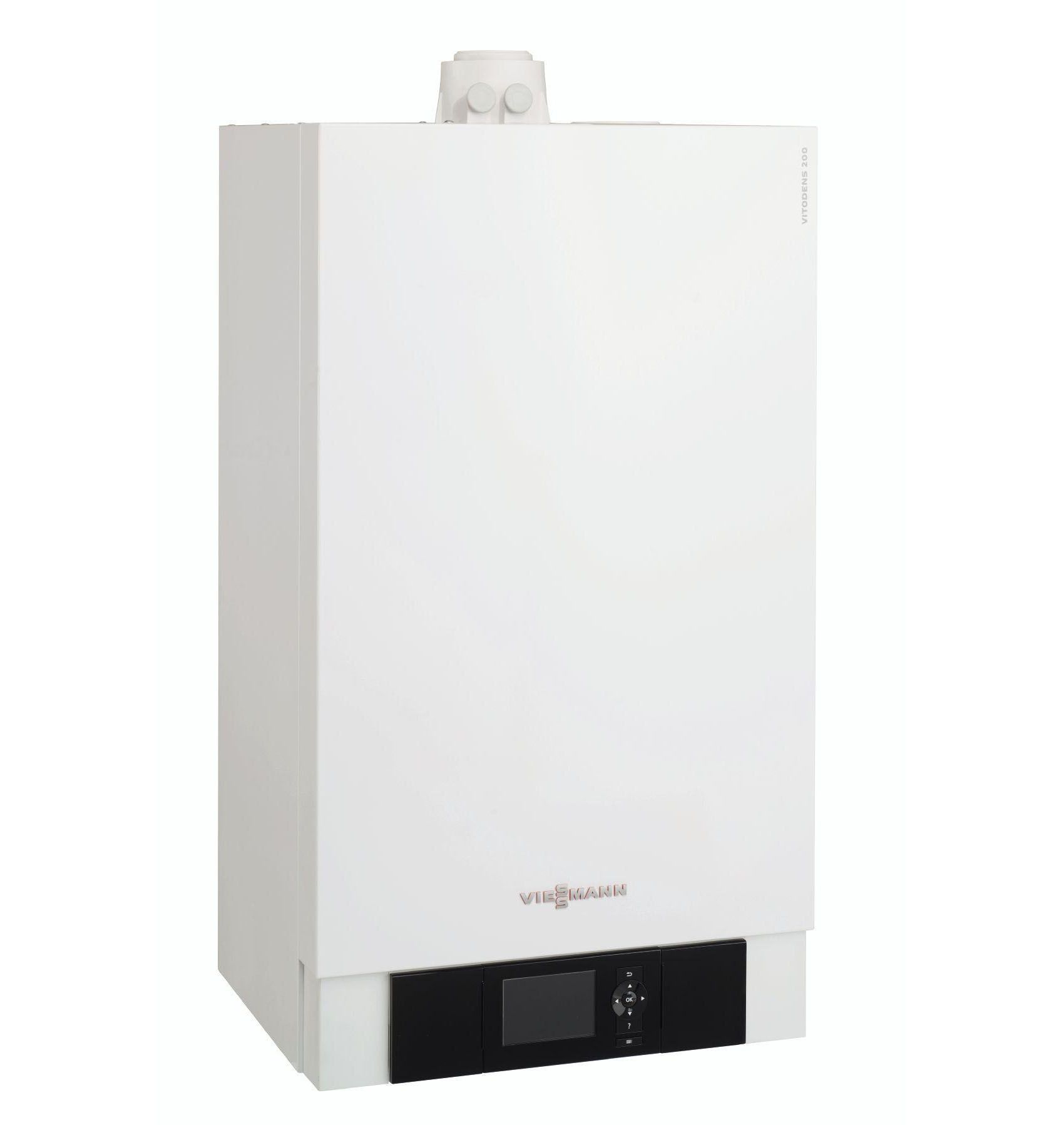
Viessmann 80 kW Vitodens 200
Orders are accepted via WhatsApp
Series: Vitodens 200-W
Model: Vitodens 200-W B2HAK08
Max. heat output: 80 kW
Type: gas, heating
Fuel: natural gas, liquefied gas
Stove: gas
Combustion chamber: closed
Number of contours: single contoured
Mounting: wall mounted
Efficiency: 109%
Mains voltage: single-phase
Weight: 83 kg
Main material of heat exchanger: stainless steel
Dimensions (WxHxD): 480x850x530 mm
Natural gas consumption: 7.94 m3 m/h
Liquefied gas consumption: 9.23 kg/h
Heat capacity: 28.1 kW
Control: Electronic
Gas/diesel work: 28.1 kW
Number of gas connections: 1
Number of connections to the heating circuit: 1
Maximum water pressure in the heating circuit: 4 bar
Nominal pressure of natural gas: 25 mbar
Coaxial chimney diameter: 100/150 mm Functions: Open indicator, thermometer, automatic ignition, flame modulation, room thermostat, outside temperature sensor
Protection: Self-diagnosis, gas control, overheat protection, frost protection mode, safety valve, pump clogging protection
The wall-mounted gas boiler Vitodens 200-W B2HAK08 is a high-quality heating equipment. It is distinguished by an affordable price-performance ratio, high comfort in heating and hot water supply, compact dimensions and an elegant design that does not go out of fashion.
The Vitodens 200-W 80kW boiler consumes less energy because it also uses the latent heat of the exhaust gases. As a result, its normative useful work coefficient reaches 98%. This allows reducing heating costs and minimizing harmful effects on the environment.
Only high-quality stainless steel was chosen as the material for economical and long-lasting operation. Therefore, the boiler is equipped with an Inox-Radial stainless steel heat exchanger. This provides the required reliability and guarantees a constant high level of utilization of the condensing heat.
The company's proprietary MatriX cylindrical burner has a wide modulation range of up to 1:19. The Lambda ProControl Plus regulator inside it automatically optimizes the combustion process for different types of gas. This ensures continuous high energy efficiency and allows maintaining a strong position in the open fuel markets where biogas blending will be required in the future.